TMSCO1 Wiring Diagram
SUB-D9 Connector
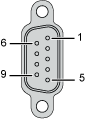
The following figure shows the pins on the CANopen bus connector:
Pin Assignment
The table describes the pins of the CANopen bus connector:
|
Pin |
Designation |
Description |
|---|---|---|
|
1 |
N.C. |
Reserved |
|
2 |
CAN_L |
CAN_L bus line (Low) |
|
3 |
CAN_GND |
CAN 0 Vdc |
|
4 |
N.C. |
Reserved |
|
5 |
CAN_SHLD |
Optional CAN shield |
|
6 |
CAN_GND |
CAN 0 Vdc |
|
7 |
CAN_H |
CAN_H bus line (High) |
|
8 |
N.C. |
Reserved |
|
9 |
N.C. |
Reserved |
|
N.C.: Not Connected. |
||
Although the cable shield is connected to pin 6 (ground), it is still necessary to properly and externally ground the cable shield to your functional ground (FE).
| WARNING | |
|---|---|
Transmission Speed and Cable Length
Transmission speed is limited by the bus length and the type of cable used.
The following table describes the relationship between the maximum transmission speed and the bus length (on a single CAN segment without a repeater):
|
Maximum transmission baud rate |
Bus length |
|---|---|
|
1000 Kbps |
20 m (65 ft) |
|
800 Kbps |
40 m (131 ft) |
|
500 Kbps |
100 m (328 ft) |
|
250 Kbps |
250 m (820 ft) |
|
125 Kbps |
500 m (1,640 ft) |
|
50 Kbps |
1000 m (3280 ft) |
|
20 Kbps |
2500 m (16,400 ft) |